As 5G continues to reshape the global connectivity landscape, organizations are faced with a key strategic decision: should they rely on public 5G networks or invest in private 5G infrastructure? This guide unpacks everything you need to know about the two models—highlighting their operational differences, performance metrics, use cases, and business implications. Whether you’re a telecom professional, IT leader, or enterprise decision-maker, this comprehensive comparison will help you navigate the evolving 5G ecosystem and determine the best-fit connectivity strategy for your organization.
Why the 5G Network Landscape is Changing
5G technology has revolutionized communication, offering unparalleled speed, low latency, and massive connectivity. While public 5G networks are widely available for general use, private 5G networks are tailored for enterprise-specific needs, creating a new dimension in network deployment. This blog provides an in-depth comparison of public and private 5G networks, diving into their KPIs, operational features, and use cases to help you make the best choice.
Public and Private 5G Networks Comparison
Below is a detailed table highlighting the operational, technical, and business distinctions between public and private 5G networks:

Figure 1: Isolated 5G Private Network on Site vs 5G Public Network
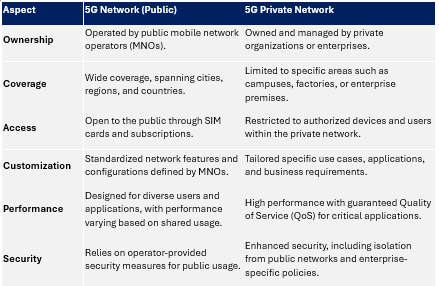
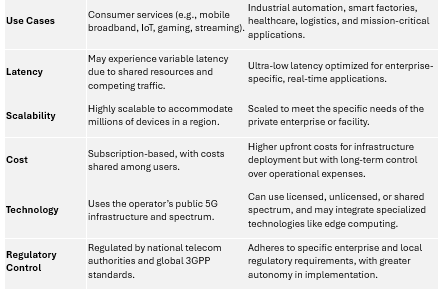
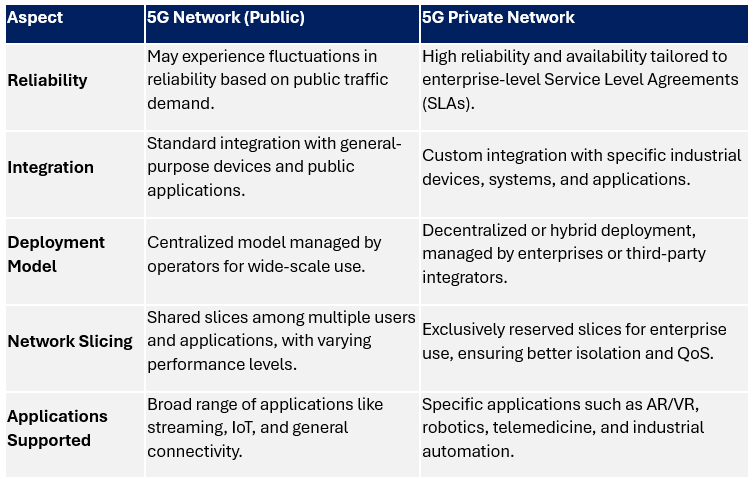
In summary, 5G networks prioritize accessibility and scalability, while private 5G networks focus on customization, security, and performance for enterprises.
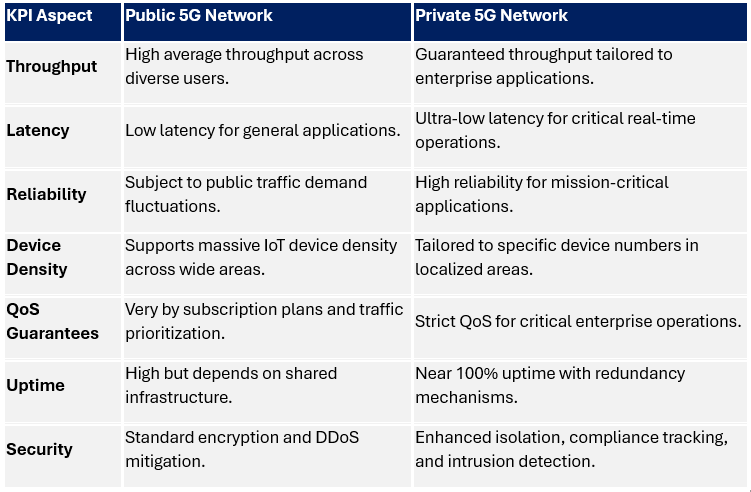
Key Performance Indicators (KPIs): Public vs. Private 5G
Private 5G networks often emphasize strict KPIs aligned with critical enterprise needs, while public networks cater to general use cases with variable performance.
Handover in Public and Private 5G Networks
Private 5G networks streamline handover for ultra-low latency applications like AGVs (Autonomous Guided Vehicles) in smart factories or drones in logistics hubs.
Public 5G Handover
- Seamless handovers across wide areas ensures uninterrupted connectivity during mobility, such as traveling between cities.
- Supports millions of devices with advanced handover techniques to manage traffic efficiently.
Private 5G Handover
- Localized Handover: Occurs between access points or cells within a facility (e.g., a factory or campus).
- Inter-System Handover: Takes place between private and public networks for hybrid deployments, ensuring seamless connectivity when moving out of private network coverage.
Final Thoughts: Choosing Between Public and Private 5G
The decision to adopt a public or private 5G network depends on your specific needs:
- Public 5G is ideal for widespread accessibility, scalability, and general-purpose connectivity.
- Private 5G is perfect for enterprises requiring high security, customization, and performance in controlled environments.
By understanding technical and operational differences, businesses can align their network strategy with their goals to unlock the full potential of 5G technology.
Whether you’re looking to deploy a private 5G network for your enterprise or leverage public 5G for IoT connectivity, contact us today to explore solutions tailored to your needs!